Gentle Guidance — Why We Don’t “Lock at the Buzzer”
Most screen-time tools work on a simple principle: time’s up, screen goes dark. Force-quit. Done.
That’s not how we do it.
A different design choice
A child’s attention is like a small stream — it has a beginning, a rhythm, and a natural place to stop. If you throw up a dam halfway through, the water doesn’t slow down — it splashes: the emotions spill out first — tears, protests, bargaining.
So we chose a different approach: gradual tightening, not sudden cutoff.
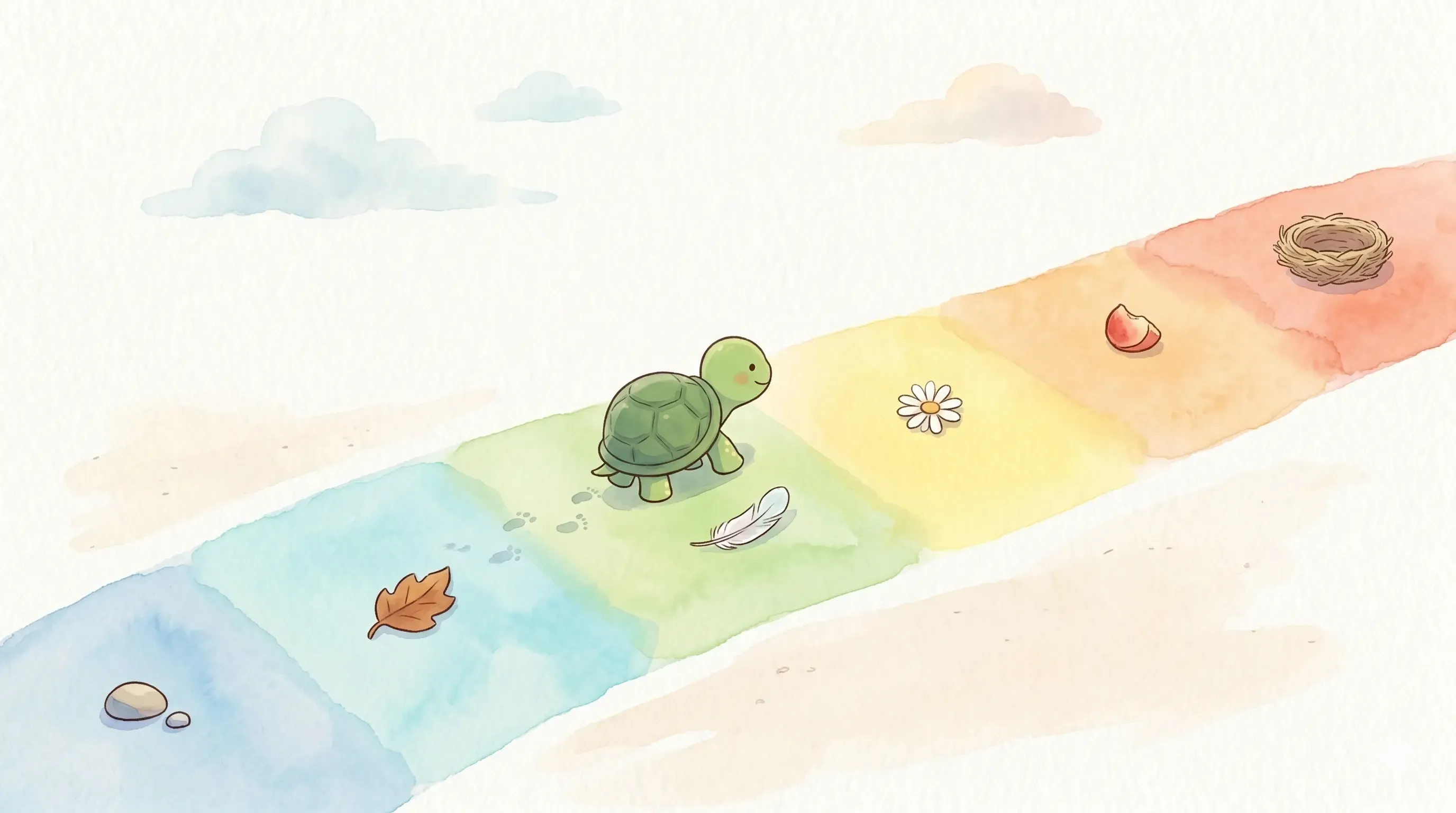
:stages-count: stages in a day
As a child uses an app, they move through a series of progressively firmer reminders:
- Normal use — no reminders at all. This is the child’s exploration time.
- Gentle Reminder — a soft banner slides across the top of the screen, doesn’t interrupt the game, just says “hey, heads up”
- Friendly Reminder — the banner stays a bit longer, the tone is a little more direct: “time to start wrapping up”
- Serious Warning — the banner lingers longer, the message is clearer: “please get ready to stop”
- Time’s Up — this is when the full-screen block finally appears. The child needs a parent PIN to continue.
- Overtime (past :overtime-threshold:) — the block stays up, and you receive a parent alert notification
These aren’t 6 separate “features.” They’re 6 psychological transitions through the same event. We believe children have the chance at every stage to stop on their own — not because they were forced to.
Why this matters
Forced lock-out is easy to build, and it’s “effective” on the surface — the time is technically controlled.
But what children learn from that kind of tool is: time is something other people impose on you, not something you manage yourself. Use it long enough, and children either learn to fight back or learn to work around it.
What we want children to learn instead is: time has a rhythm — the closer you get to the end, the more it makes sense to slow down. :stages-count: stages give children the full arc of “it’s almost over” — without taking away their chance to stop on their own terms.
A word for parents
If your child usually waits until the last stage before stopping — that’s completely normal. Adults do the same thing. If your child stops on their own in the earlier stages — that’s a very good sign. They’re learning to manage themselves.
Either way, don’t conclude the approach isn’t working just because your child reached “Time’s Up.” The :stages-count:-stage progressive reminder isn’t measuring “did the child stop on time” — it’s measuring “has the child learned to sense time passing.”
This piece describes our product philosophy, not specific how-to instructions. Want to see how it works day to day? Read A Day in the Life and FAQ.